The Most Popular Household Batteries in the USA: A Complete Practical Guide
Batteries may look simple, but they differ dramatically in size, chemistry, lifespan, storage requirements, and safety impact.
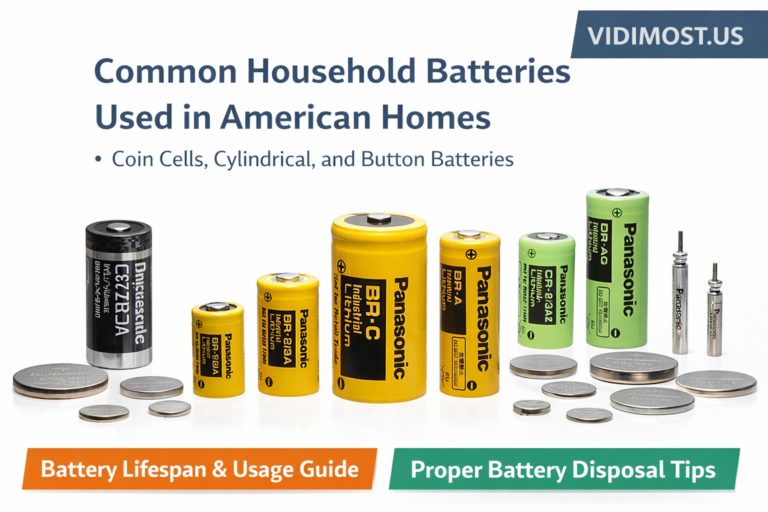
Key Takeaways (Before You Start)
Batteries may look simple, but they differ dramatically in size, chemistry, lifespan, storage requirements, and safety impact. Choosing the right battery ensures reliable device performance, longer runtime, and safe operation—especially in home security, medical, and smart home devices.
This guide covers the TOP 20 household batteries used in the United States, explains where they are used at home, how long they last, how long they can be stored, and how to dispose of them properly.
Why Are Some Batteries Big and Others So Small?
Battery size is determined by three main factors:
- Energy capacity (mAh / Wh)
Larger batteries store more energy and power devices longer. - Current delivery (power demand)
Devices like flashlights or radios need higher current → larger batteries. - Physical constraints of devices
Hearing aids, remotes, and sensors require compact batteries even if runtime is shorter.
Bigger ≠ better, smaller batteries are optimized for low-power electronics.
Shelf Life vs Usage Life (Important Difference)
- Shelf life → how long a battery can be stored unused
- Usage life → how long it powers a device once installed
Example:
A lithium battery may have 10–20 years shelf life, but only 6–24 months of actual use depending on the device.
TOP 20 Household Batteries in the USA (With Lifespan Info)
1. AA (LR6)
- Shelf life: 5–10 years (alkaline), up to 20 years (lithium)
- Typical use time: 6–24 months
- Home uses: remotes, clocks, sensors, toys
2. AAA (LR03)
- Shelf life: 5–10 years
- Typical use time: 3–12 months
- Home uses: thermostats, remotes, small electronics
3. 9V (6LR61)
- Shelf life: 5–7 years
- Typical use time: 6–12 months
- Home uses: smoke & CO detectors
4. 9V (6LR61)
- Shelf life: ~5 years
- Typical use time: 1–3 years
- Home uses: radios, flashlights
5. D (LR20)
- Shelf life: ~5 years
- Typical use time: 2–5 years
- Home uses: emergency lighting
6. CR2032 (Coin Cell)
- Shelf life: 8–10 years
- Typical use time: 1–3 years
- Home uses: key fobs, garage remotes, sensors
7. CR2025
- Shelf life: ~8 years
- Typical use time: 6–24 months
- Home uses: slim remotes
8. CR2016
- Shelf life: ~8 years
- Typical use time: 6–18 months
- Home uses: watches, small remotes
9. CR123A
- Shelf life: 10 years
- Typical use time: 1–3 years
- Home uses: security cameras, motion sensors
10. CR2450
- Shelf life: 10 years
- Typical use time: 2–5 years
- Home uses: smart sensors, medical devices
11. A23 (12V)
- Shelf life: ~3 years
- Typical use time: 6–12 months
- Home uses: gate & garage remotes
12. AAAA
- Shelf life: ~5 years
- Typical use time: 6–12 months
- Home uses: stylus pens, medical tools
13. LR44 / AG13
- Shelf life: 3–5 years
- Typical use time: weeks–months
- Home uses: toys, laser pointers
14. CR1632
- Shelf life: ~8 years
- Typical use time: 1–2 years
- Home uses: fitness devices
15. CR2
- Shelf life: ~10 years
- Typical use time: 1–2 years
- Home uses: cameras, sensors
16. 18650 Li-ion
- Shelf life: ~3–5 years
- Typical use time: 300–500 cycles
- Home uses: flashlights, power banks
17. 14500 Li-ion
- Shelf life: ~3 years
- Typical use time: rechargeable
- Home uses: specialty electronics
18. NiMH AA Rechargeable
- Shelf life: ~3–5 years
- Typical use time: 500–1000 cycles
- Home uses: remotes, cameras
19. NiMH AAA Rechargeable
- Shelf life: ~3–5 years
- Typical use time: 500–1000 cycles
- Home uses: thermostats, small devices
Batteries for Hearing Aids (Very Important)
Zinc-Air Hearing Aid Batteries
Sizes: 10, 13, 312, 675
- Shelf life: 3–4 years (sealed)
- Activated by air after sticker removal
- Typical use time: 3–14 days depending on size
Home & medical uses:
- Hearing aids
- Assistive listening devices
Once activated, zinc-air batteries cannot be turned off.
Battery Disposal & Recycling in the USA
Never throw batteries in regular trash
Why?
- Fire risk
- Environmental contamination
- Legal restrictions in many states
Proper Disposal Options:
- Home Depot / Lowe’s battery bins
- Local recycling centers
- Call2Recycle.org drop-off locations
Especially important for:
- Lithium batteries
- Coin cells (dangerous for children)
- Rechargeables
Smart Storage Tips
- Store batteries at room temperature
- Keep away from moisture
- Never mix old and new batteries
- Remove batteries from unused devices
Final Conclusions
Batteries are small components with a big impact on home safety, reliability, and convenience. Understanding battery types, sizes, shelf life, and disposal rules helps avoid device failures, leaks, and safety risks—especially in alarms, security systems, and medical devices.
Keeping the right batteries on hand—and knowing how long they last—ensures your home stays powered, protected, and prepared.

Comments ()