HID Key Fob Technologies: What’s the Difference?
If you’re working with access control systems, especially in commercial or residential buildings, you’ve probably come across HID key fobs. But not all fobs are created equal.
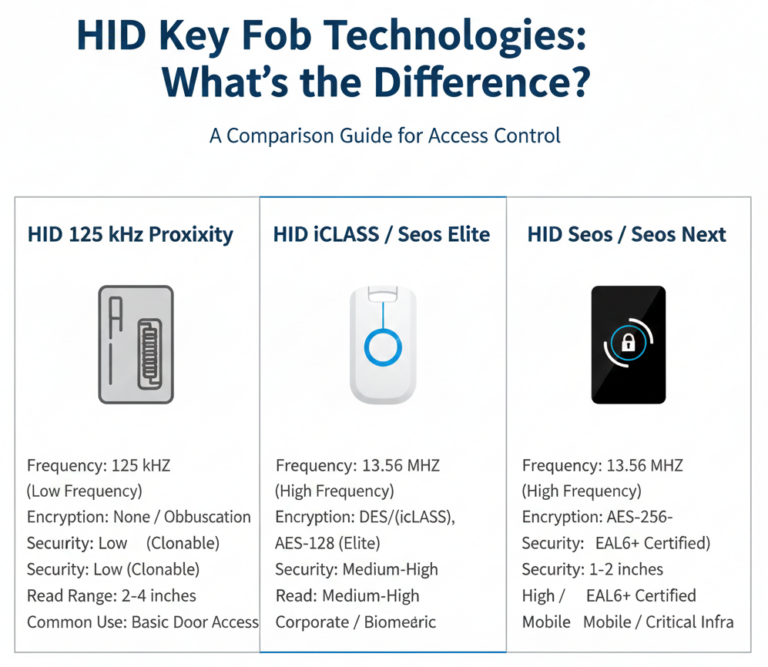
If you’re working with access control systems, especially in commercial or residential buildings, you’ve probably come across HID key fobs. But not all fobs are created equal. HID Global offers several types of credentials, and choosing the right one can significantly impact the security, compatibility, and future scalability of your system.
Here’s a breakdown of the most common HID fob technologies and what sets them apart.
1. HID Prox (125 kHz) – The Legacy Option
The most widely used low-frequency credential.
Operates at 125 kHz with no encryption, making it highly vulnerable to cloning.
Still popular in older systems due to low cost and universal compatibility.Pros: Affordable, widely supported
Cons: Poor security, easily copied with cheap devices
2. iCLASS (13.56 MHz) – Smarter & Safer
Uses high-frequency 13.56 MHz communication with encryption and mutual authentication.
Can store more data — useful for multi-function cards (e.g., building access + printing + cafeteria).
Compatible with newer HID readers.
Pros: Improved security, supports smart applications
Cons: More expensive, not compatible with legacy Prox readers
3. iCLASS SE / Seos – The Modern Secure Choice
iCLASS SE adds secure identity objects (SIO) for enhanced protection.
Seos is HID’s most advanced and secure credential format, supporting mobile access, encrypted communication, and FIPS-201 compliance.
Ideal for high-security commercial, institutional, or corporate environments.
Pros: Highest security, mobile-ready, flexible identity management
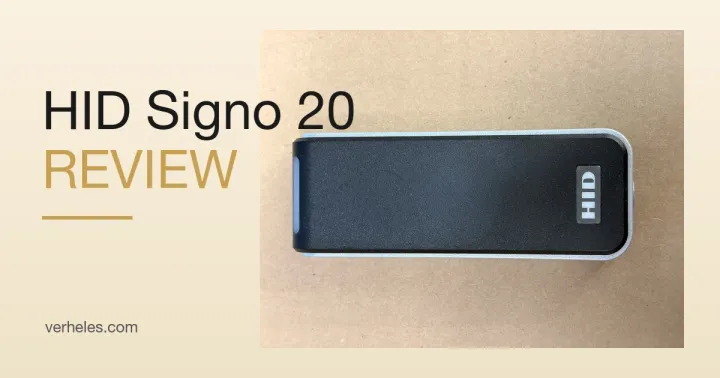
Cons: Requires compatible readers (e.g., HID Signo, iCLASS SE)
4. MultiCLASS Readers – One Reader to Rule Them All
Not a fob, but a multi-tech reader that can read Prox, iCLASS, and Seos.
Designed for organizations in transition or those with mixed credential environments.
Pros: Flexible, supports multiple fob types
Cons: Doesn’t increase security by itself
Technology Comparison Chart
| Technology | Frequency | Security Level | Cloneable? | Mobile Support | Notes |
|---|---|---|---|---|---|
| HID Prox | 125 kHz | Low | Yes | No | Legacy systems |
| iCLASS | 13.56 MHz | Medium | Difficult | No | Encrypted, smart features |
| iCLASS SE | 13.56 MHz | High | Very hard | Some (via SE) | Uses Secure Identity Objects |
| Seos | 13.56 MHz | Very High | No | Yes | Most secure, mobile-friendly |
| MultiCLASS | – | – | – | – | Universal reader, not a fob |
Which One Is Right for You?
If you’re upgrading your building’s access control or want to protect your system from key fob cloning, choosing the right HID credential type is critical. Security, cost, and future-proofing all play a role.
Need help choosing the right system or key fob for your building or business in the Chicago area? I specialize in access control solutions for condos, offices, schools, and small businesses.
Need help choosing the right system or key fob for your building or business in the Chicago area? I specialize in access control solutions for condos, offices, schools, and small businesses.
Comments ()