How Security Camera Sensors Work: Sony, onsemi, MIPI, Global Shutter, and Real Camera Quality
A simple guide to image sensors used in security cameras, IP cameras, Raspberry Pi modules, machine vision, and embedded cameras. Learn what Sony IMX, onsemi, MIPI CSI-2, rolling shutter, global shutter, and sensor size really mean.
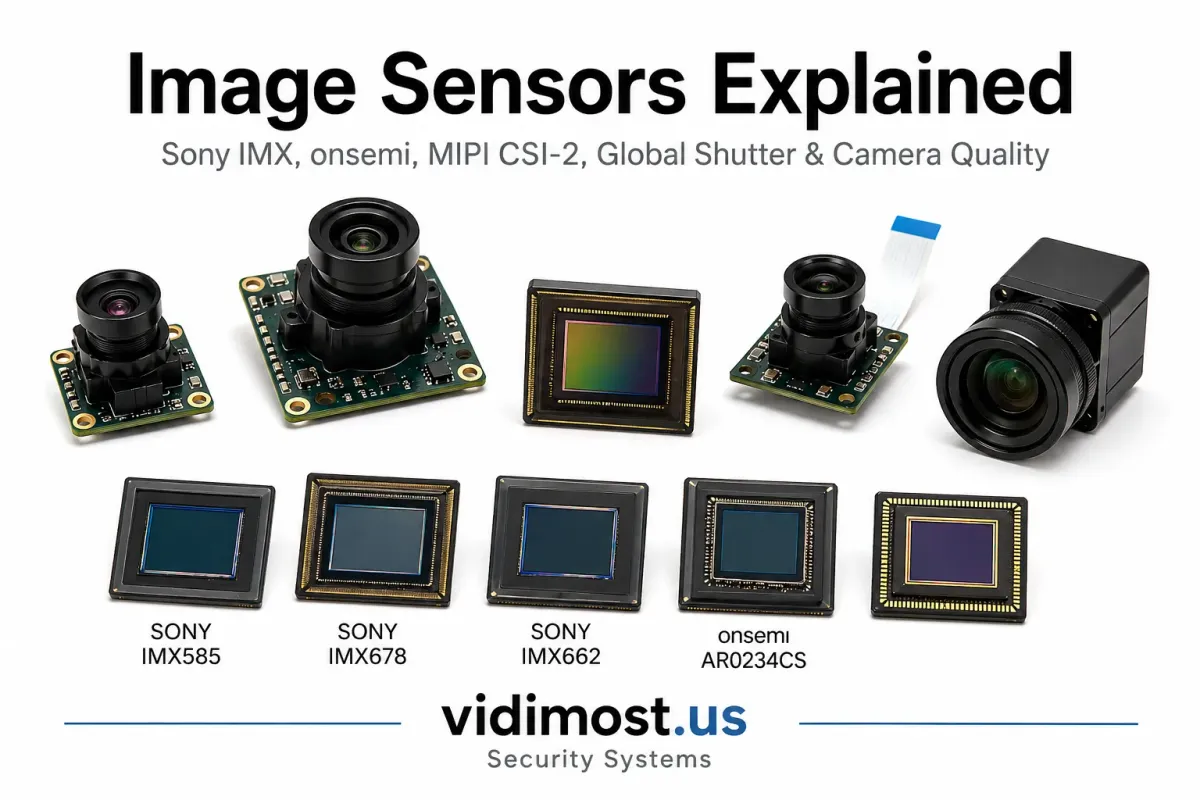
When people compare security cameras, they usually look at simple numbers: 2MP, 4MP, 5MP, 8MP, or 4K.
But the real image quality starts much deeper — inside the camera, with the image sensor.
The image sensor is the “eye” of the camera. It receives light through the lens and converts it into digital information. After that, the camera processor improves the image, compresses the video, and sends it to an NVR, VMS, app, or cloud system.
This article explains image sensors in a simple way: who makes them, how they connect inside cameras, what Sony IMX and onsemi sensors are, what MIPI CSI-2 means, and why terms like rolling shutter and global shutter matter.
What Is an Image Sensor?
An image sensor is a small semiconductor chip inside the camera. Its job is to capture light and convert it into electronic data.
A simple camera chain looks like this:
Lens → Image Sensor → Camera Processor / ISP → Video Stream
The sensor does not usually create the final video by itself. It captures raw image information. The camera processor then turns that raw data into a usable image.
Inside a typical CMOS image sensor, there are:
Pixel array
Row and column readout circuits
Analog-to-digital converters
Timing and clock logic
Configuration registers
MIPI CSI-2 or other output interface
I²C-style control interface
In simple words:
The sensor captures the image. The processor makes it look good.
Sensor vs Camera Processor
A common misunderstanding is that the sensor alone determines camera quality. It is very important, but it is not the whole story.
The sensor sends raw image data to the camera processor. The processor, also called an ISP, DSP, or SoC, handles the image processing.
The processor can control:
Exposure
Gain
White balance
Noise reduction
WDR / HDR
Sharpness
Color correction
Day/night switching
IR-cut filter behavior
Video compression
Network streaming
AI analytics
This is why two cameras with the same sensor can still look very different. Lens quality, firmware, processor quality, WDR tuning, bitrate, compression, and night-mode settings all matter.
The Most Common Image Sensor Brands
In security cameras, embedded cameras, machine vision, dashcams, and camera modules, the most common image sensor brands include:
Sony
onsemi
SmartSens
GalaxyCore
OmniVision
Samsung
Gpixel
STMicroelectronics
For security cameras and embedded camera modules, the most important names are usually:
Sony
onsemi
SmartSens
GalaxyCore
OmniVision
Each company has a different focus, price range, and manufacturing model.
Sony: The Premium Name in Image Sensors
Sony is one of the strongest image sensor manufacturers in the world. Sony sensors are used in smartphones, professional cameras, security cameras, automotive cameras, Raspberry Pi modules, and many industrial cameras.
In the security camera market, Sony is especially known for STARVIS and STARVIS 2 sensors.
These sensors are designed for strong performance in:
Low light
Night scenes
Near-infrared light
Security camera applications
Day/night cameras
A Sony sensor does not automatically mean the camera is perfect, but in many cases, Sony IMX sensors are a strong sign of good image potential.
Popular Sony Sensors for Security and Embedded Cameras
Sony IMX662
The Sony IMX662 is a Full HD-class sensor. It is popular because it has relatively large pixels and good low-light performance.
Basic characteristics:
Resolution class: Full HD
Sensor size: 1/2.8"
Pixel size: 2.9 μm
Type: Rolling shutter
Common use: Low-light cameras, security cameras, embedded modules
This sensor is interesting when sensitivity is more important than maximum megapixels.
Good use cases:
Low-light security cameras
Day/night cameras
Embedded camera modules
Robotics cameras
USB camera modules
Near-IR applications
Important note: IMX662 is not a thermal sensor. It sees visible light and near-infrared light, not heat.
Sony IMX585
The Sony IMX585 is a very strong 4K-class low-light sensor.
Basic characteristics:
Resolution class: 4K / 8MP
Sensor size: 1/1.2"
Pixel size: 2.9 μm
Type: Rolling shutter
Common use: Premium 4K security cameras and low-light cameras
This is one of the most interesting sensors for real-world security camera quality because it combines 4K resolution with a large sensor size.
Why it matters:
Large sensor area
Large pixels for 4K
Strong low-light potential
Better night performance than many smaller 8MP sensors
For security cameras, IMX585 can be more useful than simply chasing a higher megapixel number.
Sony IMX678
The Sony IMX678 is also a 4K STARVIS 2-class sensor, but it is smaller than IMX585.
Basic characteristics:
Resolution class: 4K / 8MP
Sensor size: 1/1.8"
Type: Rolling shutter
Common use: Compact 4K cameras and embedded modules
It is a good choice when the camera needs 4K resolution but the design cannot use a larger sensor and larger lens.
Good use cases:
Compact 4K security cameras
USB camera modules
Embedded vision
Low-light video
Robotics
Sony IMX675
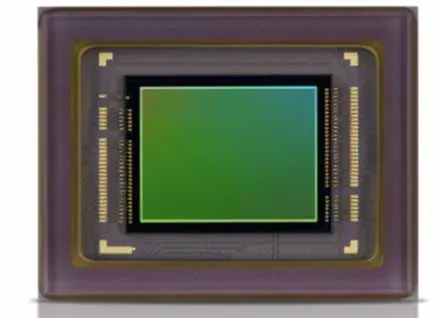
The Sony IMX675 is a 5MP-class STARVIS 2 sensor designed for security camera applications.
Basic characteristics:
Resolution class: 5MP
Sensor size: 1/3"
Type: Rolling shutter
Common use: Modern 5MP security cameras
This sensor is interesting because it targets mainstream security cameras, not only premium camera models.
Sony IMX715
The Sony IMX715 is often discussed in the 8MP / 4K security camera class.
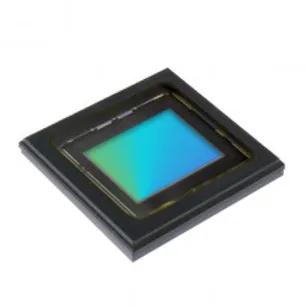
Basic characteristics:
Resolution class: 8MP / 4K
Type: Rolling shutter
Common use: 4K security cameras and camera modules
It is commonly seen in modern camera module ecosystems where 4K resolution is required in a compact design.
onsemi: A Strong U.S. Image Sensor Company
onsemi is an American semiconductor company. It makes image sensors for automotive, industrial, medical, IoT, machine vision, and embedded camera applications.
onsemi is especially interesting because it has real U.S. manufacturing infrastructure connected to CMOS image sensors.
This makes onsemi important for projects where supply chain origin, long product lifecycle, and industrial reliability matter.
onsemi AR0234CS
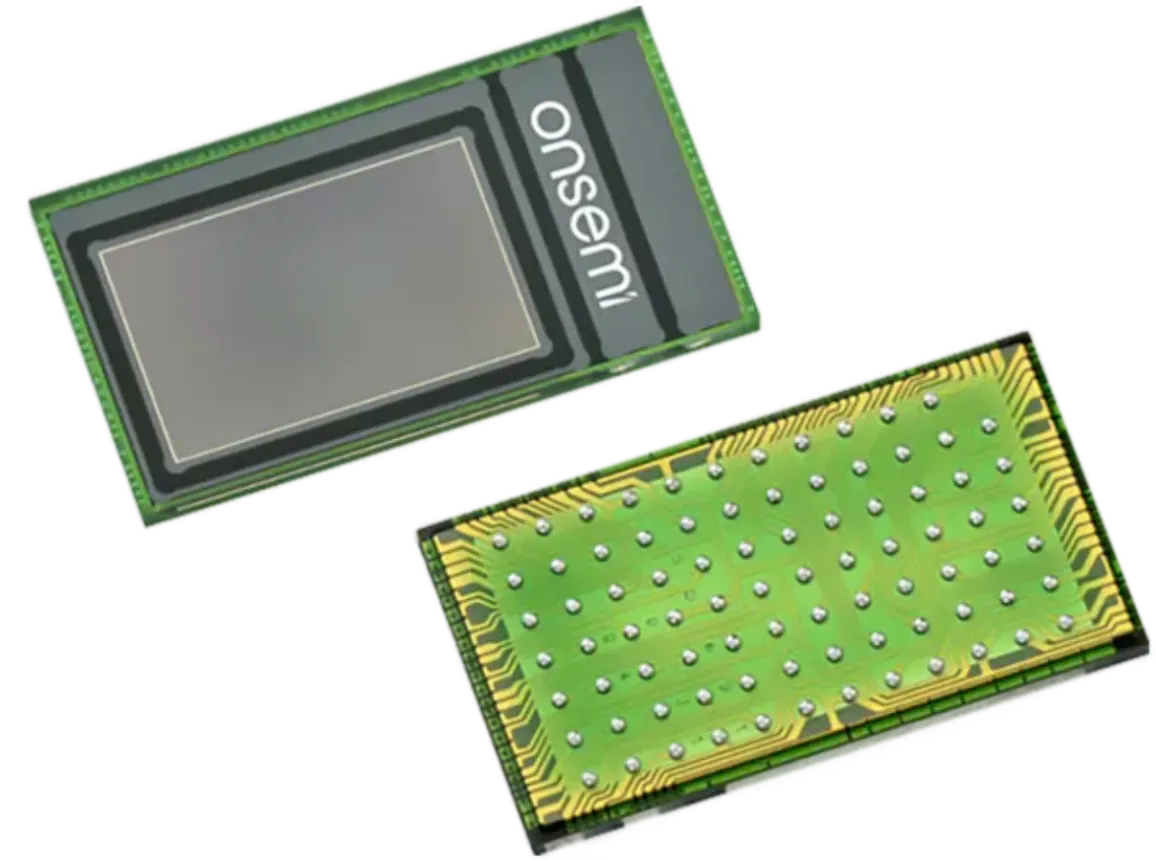
One of the most interesting onsemi sensors is AR0234CS.
Basic characteristics:
Resolution: 1920 × 1200
Resolution class: 2.3MP
Sensor size: 1/2.6"
Shutter type: Global shutter
Frame rate: Up to 120 fps at full resolution
Output: MIPI / parallel
Common use: Machine vision, robotics, fast motion, industrial cameras
The key feature is global shutter.
Unlike rolling shutter sensors, a global shutter sensor captures the whole frame at the same time. This is very useful when objects are moving quickly or when the camera itself is moving.
Good use cases:
Machine vision
Robotics
Barcode reading
Factory automation
Fast motion
Vibration-heavy environments
For normal security cameras, rolling shutter is very common. But for motion and machine vision, global shutter can be much better.
SmartSens
SmartSens is a Chinese CMOS image sensor company. It is widely used in security cameras, automotive imaging, machine vision, and consumer electronics.
SmartSens is usually associated with a fabless business model. That means the company designs sensors, but actual wafer manufacturing may be done by external semiconductor foundries.
SmartSens sensors are common in cost-sensitive and midrange cameras. They can offer good performance for the price and are often used in modern IP cameras and analog-HD cameras.
GalaxyCore
GalaxyCore is another major Chinese image sensor company. It makes CMOS image sensors for mobile devices, IoT cameras, consumer products, and camera systems.
Compared with a pure fabless company, GalaxyCore has stronger manufacturing, packaging, and testing capabilities.
GalaxyCore sensors are often used in cost-sensitive consumer and security camera products.
OmniVision
OmniVision is historically connected with the United States, but today it operates as part of a larger global semiconductor group with Chinese ownership.
OmniVision is a fabless sensor company. That means it designs sensors, but manufacturing is done through external foundry partners.
OmniVision sensors are used in:
Smartphones
Security cameras
Automotive cameras
Medical imaging
Consumer electronics
Machine vision
OmniVision remains an important image sensor brand, especially in embedded and consumer camera markets.
Where Are Image Sensors Manufactured?
The brand name does not always tell you where the sensor is physically made.
In the semiconductor industry, different steps can happen in different countries:
Sensor design
Wafer fabrication
Color filter processing
Microlens processing
Packaging
Testing
Final module assembly
A practical summary:
| Brand | Origin / Control | Manufacturing Model |
|---|---|---|
| Sony | Japan | Strong internal manufacturing, mostly Japan-based for image sensors |
| onsemi | United States | Real U.S. manufacturing capability, plus global operations |
| SmartSens | China | Mostly fabless; external manufacturing partners |
| GalaxyCore | China | More vertically integrated; manufacturing / packaging / testing capability |
| OmniVision | U.S. origin, now Chinese-owned group | Global fabless model |
For serious commercial projects, it is better not to assume country of origin based only on the logo.
Ask for:
Certificate of Origin
Country of wafer diffusion
Assembly location
Test location
Packaging location
Lifecycle statement
Availability statement
How Image Sensors Connect Inside Cameras
Modern image sensors usually do not output USB, HDMI, Ethernet, or compressed video.
They usually output raw pixel data to a camera processor.
A typical connection looks like this:
Image sensor
├── MIPI CSI-2 video output
├── I²C control bus
├── MCLK / external clock
├── reset / standby pins
└── power rails
↓
Camera SoC / ISP
The video data goes through MIPI CSI-2.
The settings are controlled through I²C or a similar two-wire control interface.
The processor configures the sensor by writing register values:
Exposure time
Analog gain
Digital gain
Frame rate
Resolution
Crop / windowing
HDR mode
MIPI lane mode
Test pattern
Mirror / flip
Black level
What Is MIPI CSI-2?
MIPI CSI-2 is the most common modern camera interface between an image sensor and a processor.
It is used in:
Security cameras
Raspberry Pi camera modules
Jetson camera modules
Smartphones
Embedded cameras
Automotive cameras
Machine vision systems
IP cameras
A simple structure:
Sony / onsemi / SmartSens sensor
↓ MIPI CSI-2 RAW Bayer
Camera SoC / ISP
↓ processed video
H.264 / H.265 / USB / HDMI / Ethernet
Important: MIPI CSI-2 is not plug-and-play like USB.
Even if a sensor and processor both support CSI-2, they still need matching:
Pinout
Power rails
Clock
Lane count
Lane speed
RAW format
Driver
Register table
ISP support
Firmware tuning
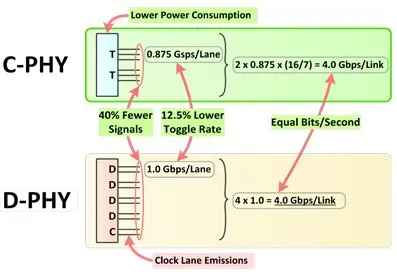
MIPI D-PHY vs MIPI C-PHY
CSI-2 is the camera protocol.
D-PHY and C-PHY are physical layers — the electrical way data travels.
MIPI D-PHY
D-PHY is the most common version in security cameras, Raspberry Pi modules, Jetson modules, and embedded cameras.
It uses differential pairs:
Clock lane
Data lane 0
Data lane 1
Data lane 2
Data lane 3
A 2-lane D-PHY connection looks like this:
CLK+ / CLK-
D0+ / D0-
D1+ / D1-
For Full HD sensors, 2 lanes may be enough.
For 4K sensors, 4 lanes are often needed.
MIPI C-PHY
C-PHY is a different physical layer that uses three-wire groups called trios. It can move a lot of data with fewer pins.
C-PHY is more common in high-end compact electronics and smartphones. In security cameras and embedded modules, D-PHY is much more common.
Simple comparison:
| Feature | MIPI D-PHY | MIPI C-PHY |
|---|---|---|
| Physical structure | Differential pairs | Three-wire trios |
| Clock lane | Usually separate | Embedded clocking |
| Common in security cameras | Yes | Less common |
| Common in Raspberry Pi / Jetson modules | Yes | Rare |
| Best for | Standard embedded cameras | High-bandwidth compact designs |
Is CSI-2 the Same for All Manufacturers?
CSI-2 is a standard, but implementation varies a lot.
Compatibility depends on:
Number of lanes
Lane speed
D-PHY or C-PHY
RAW8 / RAW10 / RAW12 / RAW14
Bayer pattern
HDR / WDR mode
I²C address
Register tables
Clock input
Power rails
Reset pins
Connector pinout
Linux driver
ISP tuning
This is why a random “MIPI camera module” does not automatically work with any Raspberry Pi, Jetson, Rockchip, Ambarella, SigmaStar, or other board.
The better question is not:
Does this sensor support CSI-2?
The better question is:
Is there a supported camera module, driver, and ISP configuration for my exact platform?
Rolling Shutter vs Global Shutter
Rolling shutter and global shutter are sensor-level features. They are not MIPI features.
Rolling Shutter
Most common camera sensors use rolling shutter.
A rolling shutter sensor reads the image line by line:
Line 1
Line 2
Line 3
...
Last line
If the camera or object moves quickly, different parts of the frame are captured at slightly different times.
This can create:
Skewed vertical lines
Jello effect
Bent wheels or propellers
Motion distortion
Vibration artifacts
Common rolling shutter examples:
Sony IMX662
Sony IMX585
Sony IMX678
Sony IMX708
Sony IMX477
Rolling shutter is popular because it is cost-effective and often offers strong low-light performance.
Global Shutter
A global shutter sensor captures the whole frame at the same time.
Entire frame exposed at once
↓
Frame is read out afterward
This is much better for motion.
Common global shutter examples:
Sony IMX296
onsemi AR0234CS
Sony Pregius sensors
Global shutter is useful for:
Robotics
Machine vision
Factory automation
Barcode reading
Moving vehicles
Vibration-heavy environments
Fast-moving objects
Comparison:
| Feature | Rolling Shutter | Global Shutter |
|---|---|---|
| Low-light performance | Often better | Often lower at same size/generation |
| Cost | Lower | Higher |
| Fast motion | Can distort | Much better |
| Security cameras | Very common | Less common |
| Machine vision | Sometimes used | Very common |
Raspberry Pi Official Camera Sensors
Raspberry Pi official camera modules are useful examples because they show how different sensors are chosen for different jobs.
| Raspberry Pi Camera | Sensor | Purpose |
|---|---|---|
| Camera Module v1 | OmniVision OV5647 | 5MP rolling shutter |
| Camera Module v2 | Sony IMX219 | 8MP rolling shutter |
| Camera Module 3 | Sony IMX708 | 12MP Quad Bayer, HDR, autofocus |
| High Quality Camera | Sony IMX477 | 12.3MP, larger sensor, C/CS or M12 lens mount |
| Global Shutter Camera | Sony IMX296 | 1.6MP global shutter |
| AI Camera | Sony IMX500 | 12.3MP intelligent vision sensor with onboard AI processing |
For simple Raspberry Pi projects, Camera Module 3 is very practical.
For better optics, the HQ Camera is useful.
For motion and machine vision, the Global Shutter Camera is the most interesting.
For AI at the edge, the AI Camera with IMX500 is very interesting.
How IP Cameras Use Image Sensors
A modern IP camera usually follows this structure:
CMOS image sensor
↓ MIPI CSI-2 RAW Bayer
Camera SoC / ISP
↓ image processing
H.264 / H.265 encoder
↓
Ethernet / PoE / RTSP / ONVIF / NVR / VMS
The image sensor does not directly create RTSP or H.265. It sends raw image data to the processor.
The processor handles:
Image processing
WDR / HDR
Noise reduction
Day/night switching
IR-cut filter control
Motion detection
AI analytics
Video compression
Network services
Firmware
This is why a professional camera brand can produce a better image from the same sensor than a cheap camera. The complete design matters.
How CVI / TVI / AHD Cameras Use Image Sensors
CVI, TVI, and AHD cameras can use similar CMOS sensors, but the output stage is different.
An IP camera:
CMOS sensor
↓ RAW
ISP / SoC
↓ H.264 / H.265
Ethernet
A CVI / TVI / AHD camera:
CMOS sensor
↓ RAW
ISP / analog-HD transmitter
↓ CVI / TVI / AHD signal
Coax / BNC
So yes, many analog-HD cameras use similar classes of sensors. The difference is that they do not output an IP stream directly. Instead, they generate an analog-HD signal over coax cable.
This is why analog-HD cameras can have very low latency and work over existing coax, while IP cameras offer more network features, analytics, remote access, and software integration.
Sensor Pricing: What Do These Chips Cost?
Sensor pricing is difficult because most image sensors are sold through OEM channels, distributors, volume agreements, and sometimes NDA-based quotes.
The price of a bare sensor is not the same as the price of a finished camera module.
Approximate practical ranges:
| Sensor | Approximate Bare Sensor Cost | Finished Module / Camera Approximation |
|---|---|---|
| Sony IMX675 | Around $10 sample price at launch | $20–$100+ depending on module |
| Sony IMX662 | Roughly $10–$25 in volume-class estimates | $80–$300+ depending on module |
| Sony IMX678 | Roughly $15–$35 in volume-class estimates | $100–$250+ depending on module |
| Sony IMX715 | Roughly $10–$30 in volume-class estimates | $50–$250+ depending on module |
| Sony IMX585 | Roughly $30–$60+ in smaller-volume estimates | $150–$500+ depending on module |
| onsemi AR0234CS | Depends heavily on channel and volume | Industrial USB/MIPI modules can cost much more |
Why does a module cost much more than the bare sensor?
Because a finished module includes:
Sensor chip
PCB or flex board
Power regulators
Clock source
MIPI connector or USB bridge
EEPROM
Lens mount
Lens
IR-cut filter
Firmware
Driver support
Calibration
Housing
Testing
Support
For testing or development, it is usually better to buy a finished camera module instead of a bare sensor.
Bare Sensor vs Camera Module
A bare sensor is very hard to use directly.
It needs:
Precise power rails
Clock input
Reset and standby control
I²C register configuration
MIPI CSI-2 routing
Correct impedance on PCB traces
Driver support
ISP tuning
Lens and filter design
Mechanical alignment
A camera module already solves many of those problems.
A module may include:
Sensor
PCB or flex cable
Connector
Clock
Power components
Lens mount
EEPROM
Sometimes ISP
Sometimes USB bridge
Sometimes driver support
For simple testing:
USB camera module = easiest for PC testing
MIPI CSI-2 module = better for embedded development
GMSL / FPD-Link module = better for longer cable runs
Which Sensor Is Best?
There is no single best image sensor for every camera.
The best choice depends on the job.
For low-light security cameras
Good options include:
Sony IMX585
Sony IMX662
Sony IMX678
Sony STARVIS 2 / STARVIS 3 sensors
For machine vision and motion
Good options include:
onsemi AR0234CS
Sony IMX296
Sony Pregius global shutter sensors
For Raspberry Pi projects
Good options include:
Sony IMX708 Camera Module 3
Sony IMX477 HQ Camera
Sony IMX296 Global Shutter Camera
Sony IMX500 AI Camera
For U.S. supply chain considerations
A strong option is:
onsemi
For cost-sensitive high-volume cameras
Common options include:
SmartSens
GalaxyCore
OmniVision
For premium low-light image quality
Sony is usually one of the strongest choices.
Practical Camera Buying Advice
Do not choose a camera only by megapixels.
A good 4MP or 4K camera with a larger sensor can outperform a cheap 8MP camera with a small sensor, especially at night.
When comparing cameras, look at:
Sensor size
Pixel size
Lens quality
Lens aperture
IR illumination
IR-cut filter quality
WDR performance
Bitrate
Compression
Processor / ISP quality
Firmware stability
Night image quality
Motion blur
Real-world sample video
For security cameras, real-world performance is more important than the datasheet alone.
Simple Summary
Here is the easiest way to think about it:
Lens = focuses the light
Sensor = captures the light
ISP / processor = makes the image usable
Encoder = compresses the video
Network / coax / USB = sends the video out
And the full camera chain:
Lens → Sensor → ISP → Firmware → Compression → Output
A great sensor helps a lot, but it does not guarantee a great camera by itself.
The best camera is the result of the full system:
Good lens
Good sensor
Good processor
Good firmware
Good image tuning
Good compression
Good installation
Conclusion
Image sensors are one of the most important parts of modern cameras, but they are only one part of the system.
Sony is one of the strongest premium image sensor manufacturers, especially for low-light and security camera applications. onsemi is especially interesting for industrial cameras, machine vision, robotics, and U.S.-based manufacturing. SmartSens, GalaxyCore, and OmniVision are also important suppliers, especially in cost-sensitive and high-volume camera markets.
Most modern sensors connect to the camera processor using MIPI CSI-2, usually over D-PHY. The sensor is controlled through I²C-style register settings. Rolling shutter and global shutter are not software features or connection standards — they are part of the sensor architecture.
For most security camera projects:
Sony STARVIS / STARVIS 2 = strong low-light direction
onsemi AR0234CS = strong global shutter / machine vision direction
MIPI CSI-2 = common internal camera connection
Larger sensor + better lens = often better real image quality
The most important lesson is simple:
Do not judge a camera only by megapixels. The sensor, lens, processor, firmware, and real-world image tuning matter much more.

Comments ()