Understanding NDAA Compliance: Why It’s Critical for Your Chicago Business Security in 2026
Is your security system legal and secure? Learn why NDAA compliance is a must-have for Chicago businesses, which brands are banned, and how to protect your property with Vidimost LLC.
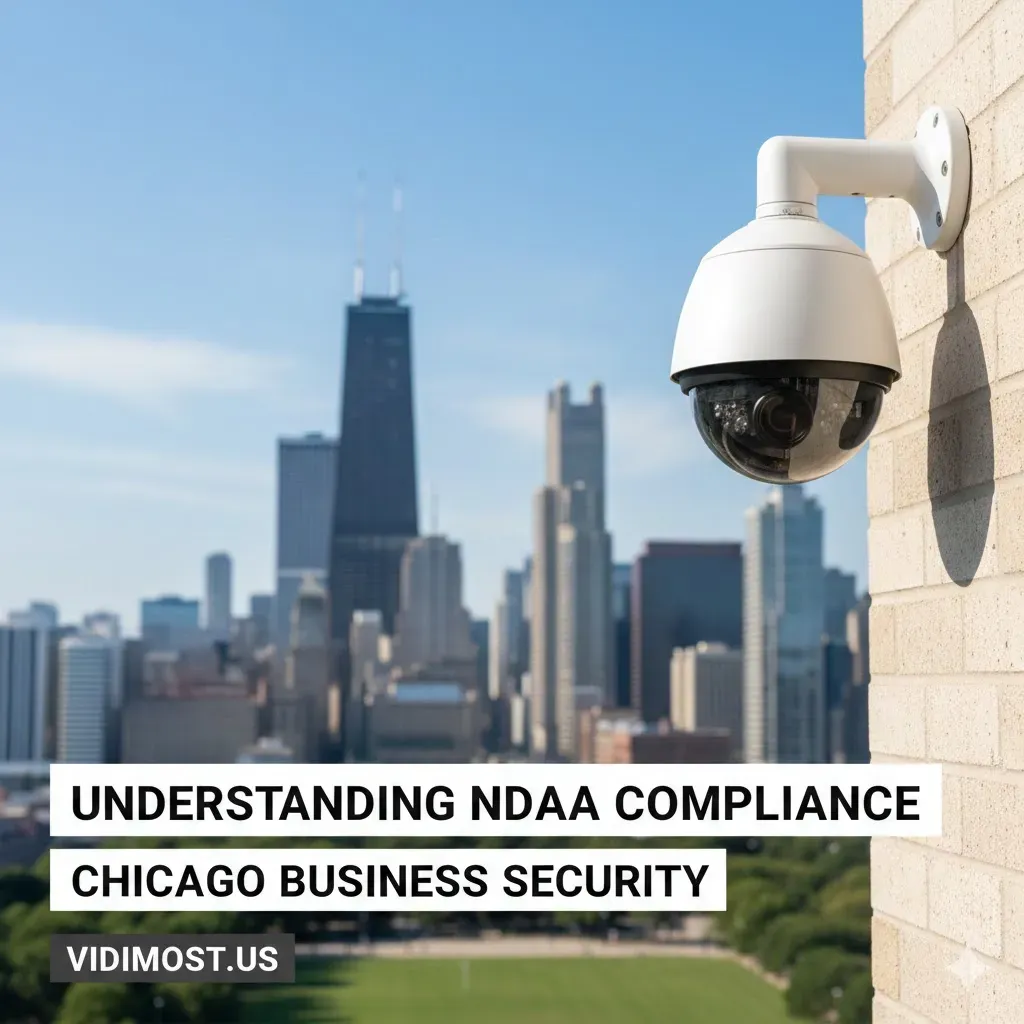
In the rapidly evolving landscape of physical security, "NDAA Compliance" has shifted from a government buzzword to a fundamental requirement for businesses across Chicago. Whether you are managing a commercial property in the Loop or a warehouse in Schaumburg, understanding these regulations is no longer optional—it's a matter of legal compliance and data integrity.
What is NDAA Compliance?
The National Defense Authorization Act (NDAA), specifically Section 889, is a U.S. federal law that prohibits the use of certain telecommunications and video surveillance equipment from specific Chinese manufacturers. The goal is simple: to protect national security from potential cyber-vulnerabilities, backdoors, and foreign espionage.
For a security system to be NDAA Compliant, it must not contain components (including microchips and SoCs) from banned entities, regardless of where the final product was assembled.
Why Chicago Businesses Must Pay Attention
Chicago is a hub for logistics, finance, and manufacturing—industries that are prime targets for cyber threats. In 2026, the risks of using non-compliant hardware include:
- Federal Funding & Contracts: If your business has (or plans to have) any federal contracts or receives federal grants, you are legally barred from using non-compliant equipment.
- Insurance Liability: Many insurance providers in Illinois are now reviewing hardware compliance as a factor in cyber-liability coverage.
- Cybersecurity Risks: Banned manufacturers often use chipsets (like HiSilicon) that are known to have unpatched vulnerabilities.
NDAA Compliant vs. Non-Compliant Brands
When choosing a provider, it’s vital to know which brands are "safe" and which are prohibited under Section 889.
| Compliance Status | Manufacturers & Brands | Key Details |
| NDAA Compliant | Axis, Hanwha Vision, Bosch, Avigilon, Mobotix | Use secure chipsets (Ambarella, Intel); Trusted by US Gov; High cybersecurity standards. |
| Banned (Prohibited) | Hikvision, Dahua, Huawei, ZTE, Hytera | Prohibited for use in federal facilities and by companies with federal ties. |
| Subsidiaries (Banned) | Ezviz, Lorex, Amcrest | Often use rebranded hardware or chipsets from Dahua or Hikvision. |
Detailed Breakdown of Compliant Hardware
To ensure your Chicago facility is secure, look for manufacturers that prioritize "Security by Design":
- Hanwha Vision (formerly Hanwha Techwin): A leader in the industry, Hanwha produces its own chipsets (Wisenet) in South Korea, ensuring full transparency in the supply chain.
- Axis Communications: Based in Sweden, Axis is a pioneer in network video and strictly adheres to NDAA standards, offering some of the best encryption in the market.
- Avigilon (Motorola Solutions): A top choice for Chicago’s commercial real estate, offering AI-powered analytics that are fully compliant and integrated.
Frequently Asked Questions (FAQ)
Does NDAA only apply to the federal government?
While the law directly governs federal agencies, its ripples affect any private business that works as a contractor or subcontractor for the government. Furthermore, it has become a "best practice" standard for all private enterprises concerned with cybersecurity.
Is it illegal to own Hikvision or Dahua cameras in Chicago?
It is not illegal for a private residence or a non-contracting business to own them, but you cannot use them if you have any ties to federal funding. Additionally, these brands are often blacklisted from professional security networks.
How can I tell if my current cameras are compliant?
The easiest way is to check the manufacturer and the chipset. If your cameras are branded as Hikvision, Dahua, or use HiSilicon chips, they are not compliant.
Does NDAA compliance apply to the software (VMS) too?
Yes. The law covers both hardware and the services (software/cloud) used to manage video surveillance.
What should I do if my system is non-compliant?
We recommend a phased replacement. Start by replacing cameras in sensitive areas (offices, server rooms) with compliant brands like Hanwha or Axis.
Navigating the complexities of federal regulations and cybersecurity can be daunting. At Vidimost LLC, we specialize in designing and installing high-performance, NDAA-compliant security systems tailored for the Chicago metropolitan area.
From advanced AI analytics to secure cloud integration, we ensure your business is not only protected from physical threats but also fully compliant with U.S. national security standards.
Ready to upgrade your security? Don't risk your data or your contracts on non-compliant hardware. Contact Chicago's experts today.

Comments ()