Why Should Businesses Use Access Control Instead of Keys?
For decades, traditional metal keys were the standard way to secure offices, retail spaces, warehouses, and apartment buildings.
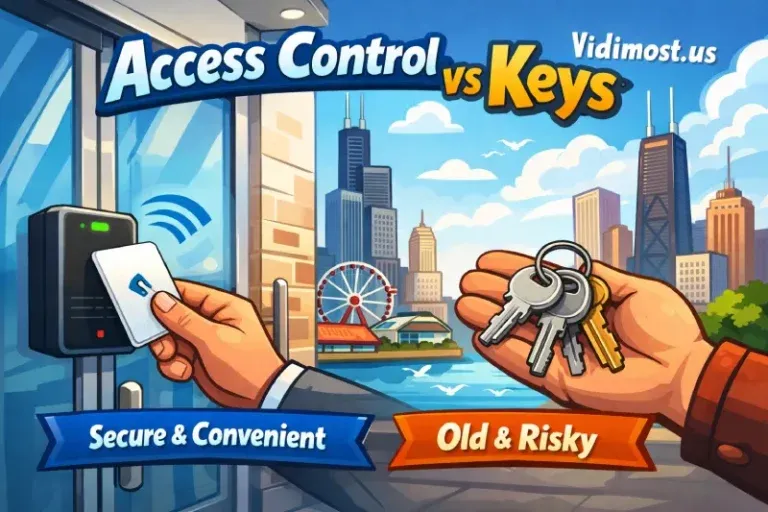
For decades, traditional metal keys were the standard way to secure offices, retail spaces, warehouses, and apartment buildings. But in today’s business environment—where employee turnover, shared spaces, and security risks are common—keys are no longer enough.
Modern electronic access control systems offer businesses a smarter, safer, and more efficient alternative. Below, we’ll explore why more companies in Chicago and across the U.S. are replacing keys with access control—and how this decision improves security, saves time, and reduces long-term costs.
The Problem With Traditional Keys
At first glance, keys seem simple and inexpensive. In reality, they create serious challenges for businesses:
No way to know who entered and when
Rekeying locks is time-consuming and expensive
When an employee leaves, access often remains active
Keys can be lost, stolen, or copied without your knowledge
For property managers, office administrators, and business owners, these issues quickly add up.
What Is Electronic Access Control?
An access control system replaces physical keys with electronic credentials, such as:
- Key cards or key fobs
- Mobile phone access (Bluetooth or NFC)
- PIN codes
- Biometrics (fingerprint or facial recognition)
Each credential is assigned to a specific person and managed through software—locally or in the cloud.
Key Advantages of Access Control Over Keys
1. Prevent Unauthorized Entry
With access control, every user is authenticated before a door unlocks. If a card or fob is lost, it can be instantly disabled—no security risk, no lock replacement.
Keys = permanent risk
Access control = immediate control
2. Eliminate Key Duplication Risks
Anyone can copy a physical key at a hardware store. Electronic credentials cannot be duplicated without system authorization, keeping your facility secure.
This is especially important for:
- Medical offices
- Law firms
- Warehouses
- Multi-tenant commercial buildings
3. Instantly Remove Access for Ex-Employees
When an employee leaves or a contractor finishes work, access can be revoked in seconds—without collecting keys or rekeying locks.
This is one of the biggest security advantages for businesses with frequent staff changes.
4. No More Rekeying Locks
Rekeying is expensive and disruptive. With access control:
- Doors stay the same
- Locks stay installed
- Only permissions change
Over time, this saves businesses thousands of dollars in locksmith costs.
5. Full Visibility With Access Logs
Access control systems create detailed entry logs for each door:
- Who entered
- Which door
- Exact date and time
This is invaluable for:
- Security investigations
- Compliance requirements
- Resolving internal disputes
- Property management accountability
Keys simply cannot provide this level of insight.
Real-World Examples
Office Buildings
A Chicago office with 40 employees switched from keys to card access. When two employees left, access was removed in under a minute—no rekeying, no downtime.
Retail & Warehouses
Managers can limit access to stockrooms and after-hours entry, reducing theft and internal shrinkage.
Property Management
Property managers save hours each month by managing access remotely instead of coordinating key handoffs, lock changes, and emergency rekeys.
Convenience for Staff and Management
Access control isn’t just more secure—it’s more convenient:
- One credential for multiple doors
- Mobile access instead of key rings
- Time-based access (business hours only)
- Temporary access for vendors and cleaners
This flexibility improves daily operations without compromising safety.
Is Access Control Worth It?
For most businesses, yes—without question. While access control systems have a higher upfront cost than keys, they pay for themselves through:
- Reduced rekeying
- Improved security
- Better accountability
- Time saved for managers and staff
In the long run, access control is not an expense—it’s an investment.
Final Thoughts
Keys belong to the past. Modern businesses need security, visibility, and flexibility, and access control delivers all three. Whether you manage an office, retail store, warehouse, or multi-tenant property, upgrading from keys to electronic access control is one of the smartest security decisions you can make.
Need Help With Access Control?
If you have questions, planning challenges, or problems with access control or other security systems, feel free to reach out.
I’m a security systems specialist based in the Chicago area, and I’m always happy to help businesses design, upgrade, or troubleshoot their security solutions.
Contact me anytime through verheles.com — let’s make your business more secure.
Comments ()